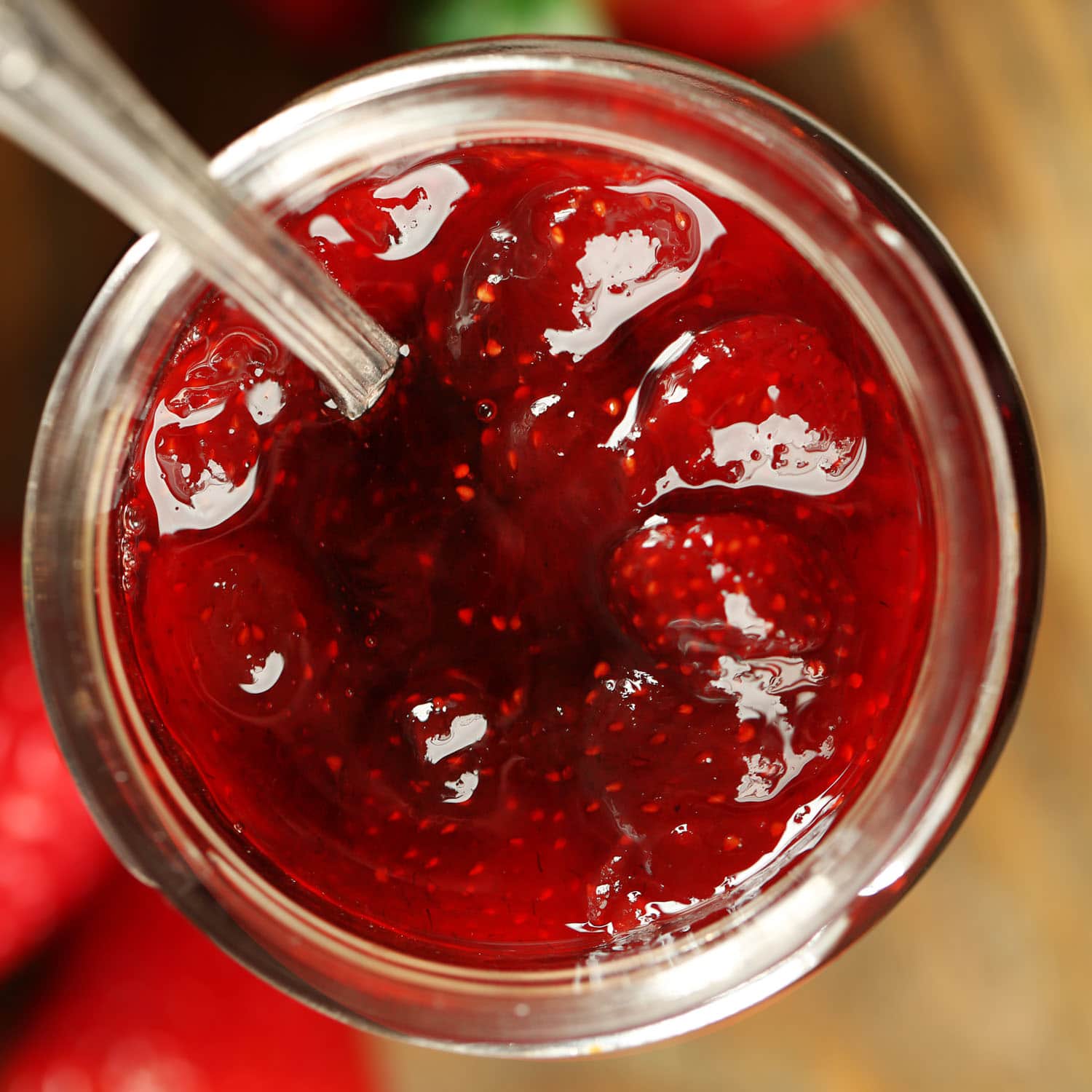
The Irresistible Charm of Homemade No-Pectin Strawberry Jam
There's something uniquely satisfying about transforming a bounty of fresh strawberries into a glistening jar of homemade jam. Perhaps you've just returned from the farmer's market with buckets of sun-ripened berries, or your garden is overflowing with ruby-red jewels. The instinct to preserve their vibrant flavor is strong, and what better way than with a luscious Simple No-Pectin Strawberry Jam: Your Easy 3-Ingredient Recipe? This article dives into the magic of crafting a perfect batch of strawberry jam without commercial pectin, relying instead on a secret weapon: lemon juice. Forget the intimidating multi-step processes or the need for specialty ingredients. This method embraces simplicity, yielding a thick, syrupy, and utterly delicious jam that's bursting with natural strawberry flavor, perfectly balanced with a zesty citrus hint. It’s the kind of preserve that elevates your morning toast, makes scones sing, and might even tempt you to enjoy it straight from the spoon.Why Go "No Pectin" for Your Strawberry Jam?
For many home cooks, the idea of making jam without added pectin is appealing for several reasons. Firstly, it often feels more "traditional" or "old-fashioned," harkening back to a time when cooks relied on the fruit's natural properties and simple techniques. Secondly, it allows the true essence of the strawberries to shine, unmasked by any potential flavors from commercial pectin. Finally, it’s incredibly empowering to create a perfectly set jam using just three common ingredients: strawberries, sugar, and lemon juice. This method gives you a truly natural, wholesome preserve that you can enjoy fresh, refrigerate, freeze, or even can for longer-term storage.Lemon Juice: Your Jam-Making Secret Weapon for a Perfect Set
When making no pectin strawberry jam, lemon juice isn't just for a tangy flavor boost – it's crucial for achieving that coveted thick, spreadable consistency. Strawberries, while delicious, are naturally low in pectin, the carbohydrate responsible for gelling in fruits. This is where the magic of acidity comes into play.The Science Behind the Set
Lemon juice provides the necessary acidity to help activate and enhance the natural pectin already present in the strawberries. When fruit, sugar, and acid are cooked together, the acid helps to break down the fruit's cell walls, releasing its natural pectin. The sugar then bonds with this pectin and water, and as the mixture boils and concentrates, the pectin molecules link together, forming a gel structure. Without sufficient acidity, even with enough natural pectin and sugar, your jam might remain syrupy rather than setting into a firm gel. Beyond its setting power, lemon juice plays a vital role in flavor. It brightens the sweetness of the strawberries, adding a delightful tart counterpoint that prevents the jam from becoming cloyingly sweet. This balance of sweet and tart is what makes homemade jam so incredibly addictive.Essential Ingredients for Your Perfect Strawberry Jam
Crafting a sublime batch of no pectin strawberry jam requires just three humble ingredients. The key is quality, especially when so few components are involved.- Fresh Strawberries: This is the star of your jam, so choose wisely. Opt for ripe, vibrant, and fragrant strawberries that are in season. Peak-season berries will offer the most intense flavor and natural sweetness, reducing your reliance on added sugar. While organic is a plus, any fresh, firm strawberry will do. Avoid overly soft or moldy berries, as they can affect both flavor and shelf life.
- Granulated Sugar: Sugar serves a dual purpose in jam-making: it's a sweetener and a crucial preservative. It draws moisture out of the fruit, creating an environment where spoilage-causing microorganisms can't thrive. The proper ratio of sugar to fruit is essential for both taste and longevity. If you reduce the sugar too much, your jam may not set correctly and will have a much shorter shelf life. For those seeking an alternative, honey can be substituted for sugar, typically at a ratio of 1/2 cup honey for every 1 cup of sugar. Keep in mind that honey will impart its own distinct flavor and may result in a slightly different texture.
- Fresh Lemon Juice: As discussed, fresh lemon juice is non-negotiable for its acidity and flavor-enhancing qualities. Always use freshly squeezed lemon juice ��� bottled varieties often contain preservatives that can impact the taste.
Optional Add-ins and Flavor Enhancers
While the core three ingredients create a fantastic jam, feel free to experiment:- Vanilla Extract: A splash of pure vanilla extract at the end of cooking can add a warm, complex note.
- Balsamic Vinegar: A teaspoon or two of good quality balsamic vinegar can deepen the strawberry flavor in an unexpected and delicious way.
- Herb Infusion: Consider infusing a sprig of basil or thyme during the simmering process, removing it before jarring for a subtle, sophisticated twist.
Crafting Your No-Pectin Strawberry Jam: A Step-by-Step Guide
- Preparation is Key: Begin by washing your fresh strawberries thoroughly. Hull them (remove the green tops) and then cut them into quarters. For a chunkier jam, larger pieces are fine; for a smoother consistency, you can halve them again. A kitchen scale is handy here; weighing your strawberries ensures accuracy, which is important for the jam's final set.
- Combine Ingredients: In a large, heavy-bottomed pot or Dutch oven, combine the prepared strawberries, granulated sugar, and fresh lemon juice. Stir gently to ensure the sugar starts to dissolve and coat the berries. Let the mixture sit for 10-15 minutes; this helps the strawberries release their natural juices.
- Initial Boil and Simmer: Place the pot over medium-high heat. Bring the mixture to a rolling boil, stirring frequently to prevent scorching and ensure the sugar fully dissolves. Once boiling, reduce the heat to low and let it simmer for about 30 minutes. During this stage, the fruit will soften, and the liquid will begin to thicken and intensify in flavor. Stir occasionally to prevent sticking.
- Second Boil and Final Simmer: After 30 minutes, increase the heat back to high, bringing the jam back to a rapid boil. Let it boil vigorously for a few minutes (around 5 minutes), then reduce the heat to low again and continue to simmer for another 10 minutes. This two-stage boiling and simmering process helps concentrate the sugars and pectin efficiently, encouraging a strong set.
- Testing for the Set: This is the crucial step for no-pectin jams. Before you start cooking, place a small plate in your freezer. When you think the jam is ready, spoon a small amount onto the cold plate. Let it sit for 30 seconds to cool, then push your finger through it. If the surface wrinkles and the jam doesn't immediately flow back together, it's ready! If it's too runny, continue simmering and test again every 5-10 minutes.
- Jarring Your Jam: Once the jam has reached your desired set, carefully ladle it into sterilized jars, leaving about 1/4 inch of headspace. Wipe the rims clean, apply lids, and screw on bands until fingertip tight. If you plan to store the jam in the refrigerator or freezer, simply let it cool to room temperature before securing the lids. For longer-term, shelf-stable storage, you may opt for a water bath canning process, following proper canning guidelines.
Pro Tip for Frozen Strawberries: If fresh strawberries aren't available, you can use frozen ones. Thaw them completely under running warm water before cutting and cooking. Be aware that frozen berries release more water, so you might need to add an extra 5-10 minutes to the total cooking time to achieve the desired consistency. For smaller batches, our guide to Small Batch Homemade Strawberry Jam: Easy, No Pectin Needed provides tailored advice.
Storing Your Homemade Strawberry Jam
Once your delicious no pectin strawberry jam is made, proper storage ensures you can enjoy it for weeks or even months to come.- Refrigeration: Jars of freshly made, cooled jam will last for 2-3 weeks in the refrigerator.
- Freezing: For longer storage without canning, freeze your jam! Transfer cooled jam into freezer-safe containers, leaving headspace for expansion. It will keep well for up to a year in the freezer. Thaw in the refrigerator before use.
- Canning (Water Bath Method): For shelf-stable jam that can last for a year or more in your pantry, follow proper water bath canning instructions. This involves sterilizing jars, processing filled jars in boiling water for a specific duration, and allowing them to cool and seal properly.
